
How to Apply PVC Film by Vacuum Membrane Pressing: A Complete Guide
Published: August 10, 2026 | By GONGDA Team
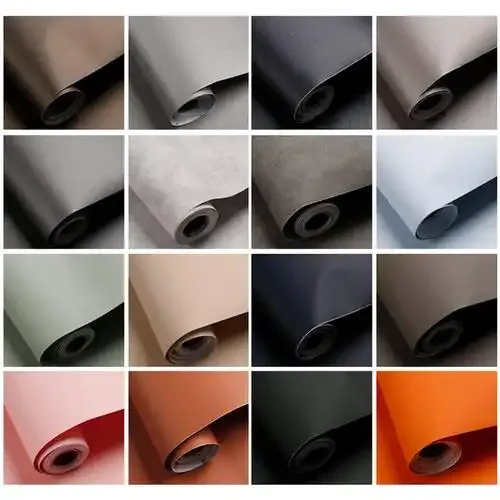
Vacuum membrane pressing is the industry-standard method for applying PVC decorative film to profiled MDF doors and panels. Whether you're manufacturing kitchen cabinet doors, wardrobe fronts or decorative wall panels, getting the process right means the difference between a flawless, durable surface and one that peels within weeks. Here's the step-by-step workflow used by professional furniture factories.
What You Need Before You Start
| Item | Specification |
|---|---|
| PVC membrane film | 0.30–0.55mm thickness, specifically formulated for membrane pressing (GONGDA's membrane foil range) |
| MDF substrate | Moisture content 6–8%, density ≥700 kg/m³ |
| PUR or EVA adhesive | Water-based PUR for best results; EVA for budget applications |
| Vacuum membrane press | Silicone membrane, minimum 1.5kW heating, vacuum ≥ -0.9 bar |
| Glue spreader / sprayer | Uniform coverage 60–80g/m² (wet) |
Step 1: Surface Preparation
The MDF panel must be clean, dry and properly sanded. Start with 180-grit followed by 240-grit sanding to remove any machining marks. Blow off all dust with compressed air — embedded particles will show as bumps under the film. Sand the profiled edges (routers leave micro-ridges that cause poor adhesion).
Critical check: MDF moisture content must be ≤8%. Higher moisture turns to steam during heating, creating bubbles under the film. If your panels have been stored in humid conditions, pre-dry them in a low-temperature oven (35–40°C) for 2–4 hours.
Step 2: Glue Application
Apply adhesive uniformly across the entire surface, including the profiled edges. A spray system gives the most even coverage; roller application works but requires careful operator technique on curved profiles. Target: 60–80 g/m² wet weight.
After application, let the glue flash off for 5–15 minutes (depending on ambient temperature and humidity). The surface should be tacky but not wet when you touch it with a dry finger. Over-drying or under-drying are equally problematic.
Step 3: Film Placement & Alignment
Lay the PVC film over the glued panel with at least 50mm overhang on all sides. The overhang is essential — it provides the grip area for the silicone membrane to pull the film tight into corners and crevices. For panels with deep profiles (>15mm), increase overhang to 80mm.
Many factories pre-heat the film for 30–60 seconds with an IR lamp before placing it — this softens the PVC slightly and improves initial drape. But don't overdo it; excessive pre-heating can pre-cure the adhesive.
Step 4: Pressing Parameters
This is where most problems happen. The correct cycle depends on your film thickness and profile complexity, but as a starting reference for 0.35mm GONGDA membrane foil:
| Parameter | Setting |
|---|---|
| Upper platen temperature | 120–140°C |
| Lower platen temperature | 50–60°C |
| Vacuum pressure | -0.90 to -0.95 bar |
| Pressing time | 90–180 seconds (shorter for flat, longer for deep profiles) |
| Cooling time | Minimum 60 seconds under vacuum before release |
Pro tip: For deep-profile Shaker-style doors with 15–20mm frame depth, reduce upper platen temperature to 110°C and extend pressing time to 180–240 seconds. The slower heat transfer prevents scorching while ensuring the adhesive activates fully in the deep corners.
Step 5: Cooling & Trimming
Never release the vacuum immediately after the heating cycle. Keep the vacuum on during the cooling phase — this is when the adhesive cures and the film locks into place. Releasing too early causes spring-back, where the film lifts from concave profiles.
After release, trim the overhang with a sharp blade or CNC trimming unit. For edge quality, route at 45° rather than 90° to the panel surface — this creates a cleaner edge that doesn't catch on clothing or cleaning cloths.
Common Problems & Quick Fixes
| Problem | Likely Cause | Fix |
|---|---|---|
| Bridging (film doesn't reach bottom of profile) | Not enough overhang or film too thick | Increase overhang to 80mm; use 0.30–0.35mm film |
| Bubbles / blisters | Moisture in MDF or glue not fully flashed off | Pre-dry MDF; extend flash-off time |
| Edge lift after 24 hours | Insufficient cooling under vacuum | Extend cooling phase to 90+ seconds |
| Film scorching / discolouration | Upper platen too hot | Reduce to 110–120°C; check thermocouple calibration |
| Orange peel texture | Over-application of glue | Reduce to 50–60 g/m²; use finer spray nozzle |
Need technical support for your pressing line?
Our engineers can review your parameters and recommend the right film grade for your specific press model.
Get Technical Support